Top 10 GLP-1 & GIP/GLP-1 Medications Compared: Wegovy, Zepbound, Retatrutide (2026)
The GLP-1 class has transformed obesity and T2D care since Saxenda's 2014 approval. Six drugs are FDA-approved across the two indications; four more are in Phase 3 with 2026 readouts.
Quick Answer
- Zepbound leads approved drugs at 20.9% weight loss in SURMOUNT-1.
- Retatrutide hit 30.3% at 104 weeks but is not yet FDA-approved.
- Oral orforglipron filed for FDA review in 2026.
- CagriSema missed its head-to-head goal against tirzepatide.
Medical disclaimer: Informational only, not medical advice. GLP-1 receptor agonists carry an FDA boxed warning for thyroid C-cell tumors and risks including pancreatitis, gallbladder disease, and acute kidney injury. Investigational drugs below are not FDA-approved.
At a glance: 10 GLP-1 medications compared
| Rank | Medication | Brand | Avg Weight Loss | Verdict |
|---|---|---|---|---|
| 1 | Tirzepatide | Zepbound / Mounjaro | 20.9% (SURMOUNT-1) | Best approved option for obesity |
| 2 | Semaglutide | Wegovy / Ozempic / Rybelsus | 14.9% (STEP 1) | Most prescribed and best-studied |
| 3 | Retatrutide | (investigational) | 30.3% at 104 wk | Most powerful in Phase 3, not yet approved |
| 4 | CagriSema | (investigational) | 22.7% (REDEFINE 1) | Strong data but missed superiority vs tirzepatide |
| 5 | Orforglipron | (investigational) | 12% (ATTAIN-1) | First oral small-molecule GLP-1 nearing approval |
| 6 | Liraglutide | Saxenda / Victoza | 8.0% (SCALE) | Daily injection, largely superseded |
| 7 | Dulaglutide | Trulicity | ~10 lb (AWARD-11) | T2D first, modest weight effect |
| 8 | Exenatide | Bydureon BCise | ~3.3 lb (DURATION) | Older weekly T2D drug |
| 9 | Mazdutide | (investigational) | 20.1% (GLORY-2) | China-first, no US plans |
| 10 | Lixisenatide | Adlyxin (discontinued US) | minimal | Withdrawn from US market 2023 |
The GLP-1 class has transformed obesity and T2D care since Saxenda's 2014 approval. Six drugs are FDA-approved across the two indications; four more are in Phase 3 with 2026 readouts.
Below I rank the 10 most clinically relevant agents. Approved drugs are ranked on pivotal-trial weight loss; investigational drugs on Phase 3 readouts. FDA status for T2D and obesity are separate approvals.
1. Tirzepatide (Zepbound / Mounjaro) — Best Approved Option for Obesity (Verdict: Highest weight loss among approved GLP-1s)
Tirzepatide is a once-weekly dual GIP and GLP-1 receptor agonist from Eli Lilly. The FDA approved Mounjaro for type 2 diabetes in 2022 and Zepbound for chronic weight management in 2023.
In the pivotal SURMOUNT-1 trial in NEJM, adults without diabetes lost 15.0% at 5 mg, 19.5% at 10 mg, and 20.9% at 15 mg over 72 weeks versus 3.1% on placebo. That is the highest weight loss any approved single agent has produced.
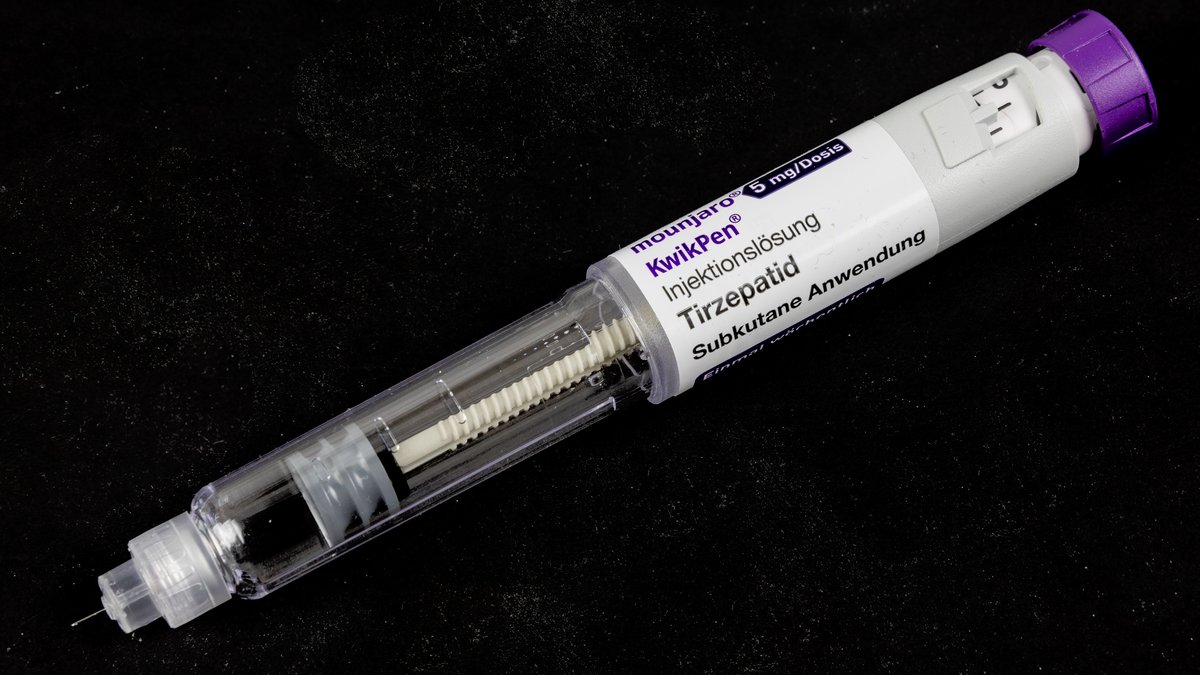
Dosing starts at 2.5 mg weekly and titrates monthly to maintenance at 5, 10, or 15 mg, now also in a KwikPen multi-dose option. List price runs about $1,086/month, but LillyDirect self-pay vials start at $299/month. Verdict: best approved option for obesity.
2. Semaglutide (Wegovy / Ozempic / Rybelsus) — Most Prescribed and Best-Studied (Verdict: Largest evidence base in the class)
Semaglutide from Novo Nordisk is the most widely prescribed GLP-1 in history. The same molecule is sold as Ozempic for T2D (2017), Wegovy for weight management (2021), and Rybelsus oral tablets (2019).
The pivotal STEP 1 trial showed 14.9% weight loss on Wegovy 2.4 mg over 68 weeks versus 2.4% on placebo. In SUSTAIN-FORTE, Ozempic 2 mg beat 1 mg on A1C reduction.
Wegovy is injected weekly, titrated 0.25 mg up to 2.4 mg. Rybelsus is a daily tablet at 3, 7, or 14 mg, joined by a new 25 mg dose for obesity in 2025.
Ozempic list price is $935-$969/month, dropping to $25/month with NovoCare. Wegovy self-pay runs $199-$499/month.
Verdict: most prescribed and best-studied.
3. Retatrutide (Investigational) — Most Powerful in Phase 3 (Verdict: Bariatric-surgery-level weight loss but not yet approved)
Retatrutide is Eli Lilly's first-in-class triple agonist of GIP, GLP-1, and glucagon receptors. The drug is not FDA-approved and is investigational only.
In the Phase 3 TRIUMPH-1 trial in adults with obesity, retatrutide achieved 28.3% mean weight loss at 80 weeks and 30.3% at 104 weeks — matching outcomes from sleeve gastrectomy.
The Phase 3 TRANSCEND-T2D-1 trial in T2D reported A1C reductions up to 2.0% and weight loss of 16.8% (36.6 lbs) at 40 weeks. Doses studied are 4 mg, 9 mg, and 12 mg weekly. Lilly has signaled regulatory submissions, though no US approval timeline is confirmed.
Verdict: most powerful Phase 3 candidate, not yet available.
4. CagriSema (Investigational) — Strong Data, Missed the Headline (Verdict: Effective but failed head-to-head superiority vs tirzepatide)
CagriSema is Novo Nordisk's fixed-dose combination of cagrilintide (an amylin analog) and semaglutide 2.4 mg, dosed once weekly. The drug is investigational with a recent FDA NDA submission.
REDEFINE 1 in adults without diabetes showed 22.7% mean weight loss at 68 weeks; REDEFINE 2 in T2D + obesity showed 15.7%.
The disappointment was REDEFINE 4, an 84-week head-to-head against tirzepatide 15 mg. CagriSema delivered 23.0% versus 25.5% for tirzepatide and missed noninferiority. Pricing is not yet set.
Verdict: strong data but Zepbound stays the benchmark.
5. Orforglipron (Investigational) — First Oral Small-Molecule GLP-1 Near Approval (Verdict: Oral convenience with mid-tier weight loss)
Orforglipron is Eli Lilly's once-daily oral small-molecule GLP-1 agonist. Unlike Rybelsus, it has no food or water restrictions. The drug is investigational with Lilly targeting global regulatory submissions in 2026.
In Phase 3 ATTAIN-1, all doses hit the primary endpoint with up to 12.4% weight loss at 72 weeks. ATTAIN-2 in T2D + obesity showed 10.5% weight loss and 75% of high-dose patients reaching A1C below 6.5%.
The head-to-head ACHIEVE-3 trial in The Lancet showed non-inferior glycemic control versus oral semaglutide. Doses studied are 6, 12, and 36 mg daily. Verdict: first true oral small-molecule GLP-1 nearing the US market.
6. Liraglutide (Saxenda / Victoza) — Daily Injection, Largely Superseded (Verdict: Older option, weaker weight loss)
Liraglutide is a once-daily GLP-1 agonist from Novo Nordisk. Victoza was FDA-approved for T2D in 2010 and Saxenda for weight management in 2014.
In the SCALE Obesity and Prediabetes trial, Saxenda 3.0 mg produced 8.0% weight loss at 56 weeks versus 2.6% on placebo — roughly half what Wegovy and Zepbound deliver.
Dosing starts at 0.6 mg daily and titrates weekly to 3.0 mg for weight loss or 1.8 mg for diabetes. Saxenda brand retail is $1,349/month, though generic liraglutide is available at $350-$650/month. Verdict: largely superseded by weekly agents.
7. Dulaglutide (Trulicity) — T2D First, Modest Weight Effect (Verdict: Diabetes-focused with limited weight loss)
Dulaglutide is Eli Lilly's once-weekly GLP-1 agonist, FDA-approved for T2D in 2014. It is not approved for chronic weight management.
In AWARD-11, higher doses of 3 mg and 4.5 mg produced superior A1C reduction versus 1.5 mg. Across the AWARD program, average weight loss on 1.5 mg was 6-7 lb over 6-12 months, rising to roughly 10 lb at 4.5 mg.
Approved doses are 0.75, 1.5, 3, and 4.5 mg weekly. The pen is widely considered the easiest in the class — no needle handling and no titration if 0.75 mg is enough. List price is $886.56/month, with savings cards dropping eligible patients to $25 per 3-month prescription.
Verdict: solid T2D option, not for obesity.
8. Exenatide (Bydureon BCise) — Older Weekly T2D Drug (Verdict: Class pioneer now eclipsed)
Exenatide is the original GLP-1 receptor agonist, derived from Gila monster saliva. The weekly version, Bydureon BCise, was FDA-approved for T2D in 2017. It is not approved for weight loss.
In DURATION-NEO-1, BCise reduced A1C by 1.4% versus 1.0% for twice-daily Byetta at 28 weeks. Weight loss was modest at 1.5-1.9 kg (3.3-4.2 lb).
The single-dose autoinjector requires no titration — patients inject 2 mg weekly with no dose escalation. The drug is rarely prescribed today because semaglutide and tirzepatide produce greater A1C and weight benefit. Verdict: class pioneer, now eclipsed.
9. Mazdutide (Investigational) — China-First Dual Agonist (Verdict: Strong Chinese data, no US plans)
Mazdutide is a dual GLP-1 and glucagon receptor agonist developed by Innovent Biologics with Eli Lilly. The drug is investigational and being filed first in China — no US regulatory pathway has been announced.
The Phase 3 GLORY-1 trial in NEJM showed 15-17% weight reduction at 6 mg in Chinese adults with obesity. The GLORY-2 trial added 9 mg and reached 20.1% weight loss.
In DREAMS-3 versus semaglutide in T2D, mazdutide showed superior glycemic control with comparable weight loss. Innovent has submitted to China's NMPA, but whether US filings happen depends on Lilly's priorities. Verdict: relevant globally but unlikely in US near-term.
10. Lixisenatide (Adlyxin) — Discontinued in the US (Verdict: No longer available)
Lixisenatide was Sanofi's once-daily GLP-1 receptor agonist, FDA-approved as Adlyxin in 2016 for type 2 diabetes. Sanofi discontinued US sales effective January 1, 2023.
The GetGoal clinical program enrolled more than 4,500 patients across 13 trials and showed modest A1C reduction and minimal weight effect. The drug was approved for diabetes only, never for weight loss.
The decision to pull Adlyxin was commercial — Sanofi cited market saturation by more effective weekly agents like semaglutide and dulaglutide. Lyxumia remains available in some European markets. Verdict: historical interest only.
How We Ranked
GLP-1 rankings (medications, providers, comparisons) combine:
- Clinical evidence: SUSTAIN, STEP, PIONEER, and SOUL trial data (NEJM, JAMA, NCBI), FDA prescribing information, and CMS coverage criteria.
- Patient-reported outcomes: r/Semaglutide, r/Tirzepatide, r/GLP1, and the verified GLP-1 Daily community from the past 12 months. We track patterns in supply shortages, compounding-pharmacy reports, and adverse-event clustering.
- First-hand provider testing: editorial telehealth consults to each ranked provider verifying drug source, lab requirements, and continuity of care.
What we never accept: paid placement, compounding-pharmacy referral fees, or sponsorships that influence brand recommendations. Disclosure: affiliate links to vitamin and HSA-related resources appear elsewhere on the site and never affect medication or provider rankings.
Update cadence: each provider quarterly; pricing on demand. Last-updated at top. Email research@theglp1daily.com.
Frequently Asked Questions
Which GLP-1 has the highest FDA-approved weight loss?
Zepbound (tirzepatide) at 20.9% over 72 weeks at the 15 mg dose in SURMOUNT-1. Wegovy (semaglutide) is second at 14.9% over 68 weeks in STEP 1.
Is retatrutide available by prescription?
No. Retatrutide is investigational and only available through clinical trials. Eli Lilly has not announced a US filing timeline despite TRIUMPH-1 and TRANSCEND-T2D-1 readouts.
What is the difference between Ozempic and Wegovy?
Both contain semaglutide from Novo Nordisk. Ozempic is FDA-approved for type 2 diabetes at up to 2 mg weekly, while Wegovy is FDA-approved for chronic weight management at up to 2.4 mg weekly.
Is there an oral GLP-1 medication?
Yes. Rybelsus (oral semaglutide) is FDA-approved for T2D at 3, 7, or 14 mg daily and now at 25 mg for obesity. Orforglipron, a once-daily oral small-molecule GLP-1 from Lilly, is expected to be filed with the FDA in 2026.
How much do GLP-1 medications cost without insurance?
List prices range from about $886/month for Trulicity to $1,349/month for Saxenda. LillyDirect offers Zepbound from $299/month, and NovoCare offers Wegovy at $199-$499/month and Ozempic at $25/month with a savings card.
Related Reading: For deeper coverage of specific medications, see our tirzepatide vs semaglutide comparison for diabetes, our refreshed Zepbound complete guide, our Rybelsus oral GLP-1 deep dive, and our Phase 3 CagriSema stacking analysis.
-- The GLP-1 Daily Team
On Google
Get our answers in your Google results.
Add The GLP-1 Daily as a preferred source and Google will surface our reporting more often — in Top Stories and AI answers, marked with a preferred badge. One tap, free, undo anytime.
Add us as a preferred sourceOpens Google's source preferences for theglp1daily.com. No sign-up with us — it's a Google setting.